
Real-Time Data Analytics for B2B: How to Capture and Act on Buyer Intent Faster

A buyer can go from “just researching” to actively evaluating a solution faster than most reporting cycles can keep up. They explore product pages, compare integrations, review technical resources, and return with increasingly specific questions.
The activity is already happening. The challenge is recognizing when it starts to matter. A weekly report can explain past performance, but it cannot show teams which accounts are becoming more engaged right now.
Real-time analytics works like a radar system, helping teams detect meaningful changes in buyer behavior and respond while opportunities are developing.
In this article, we’ll explore how real-time analytics works, what information helps reveal buyer intent, and how B2B teams turn recent activity into action.
What Changes When Data Moves in Real Time?
Most analytics systems tell teams what already happened. They explain traffic, campaigns, conversions, and customer behavior after the activity is recorded.
Real-time analytics adds the missing moment between activity and action. It works with existing analytics platforms, CRM systems, and marketing tools to help teams recognize meaningful changes while buyer interest is developing.
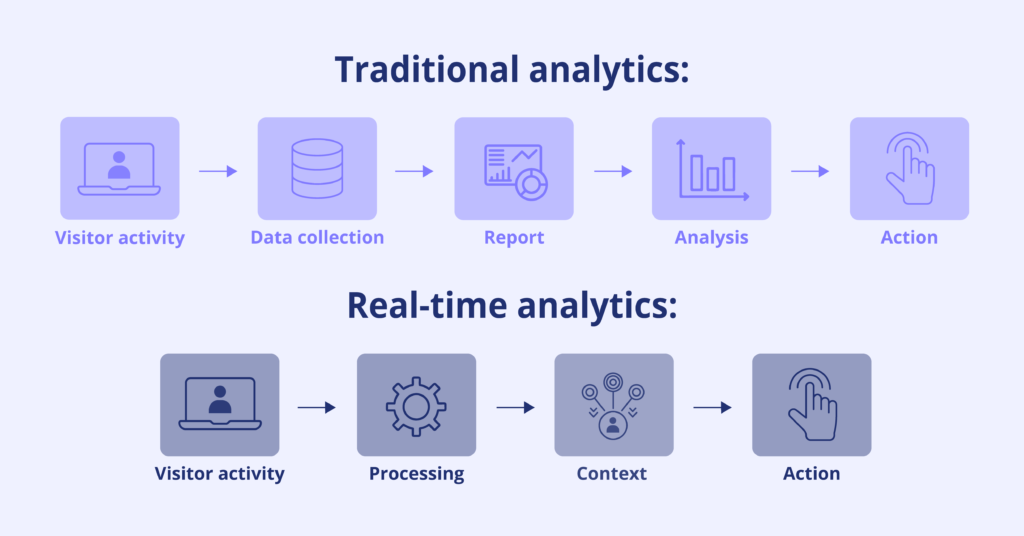
In addition, real-time insights become more useful when teams can understand how engagement develops across interactions.
For example, an account that returns to product pages, reviews API documentation, and checks security resources within a few days may require a different response than someone who visits one blog post and leaves.
Why B2B Teams Need Real-Time Buyer Intent Signals
You have traffic coming to your website. You see the pages people visit, the content they engage with, and the campaigns bringing them in. The harder part is recognizing when those actions point to an active buying process.
Luckily, buyer intent is not always obvious at first glance. The clues are often spread across different parts of the buying process. An engineer may explore integrations, a security specialist may review compliance documentation, and procurement may compare pricing and contract requirements.
For revenue teams, these actions provide important context about where an account is in its evaluation process. The difficulty comes from recognizing meaningful changes among large volumes of activity.
For example, an account may:
- return to product pages several times
- review API documentation
- explore security resources
- compare pricing information
Real-time analytics helps teams identify these changes as they happen and bring relevant information into marketing, sales, and revenue workflows.
How Real-Time Analytics Helps Marketing and Sales Teams Act Faster
Finding out an account was highly engaged last month is a little like getting a weather forecast after the storm has passed. Same, real-time analytics becomes valuable when teams can use current activity to make decisions.
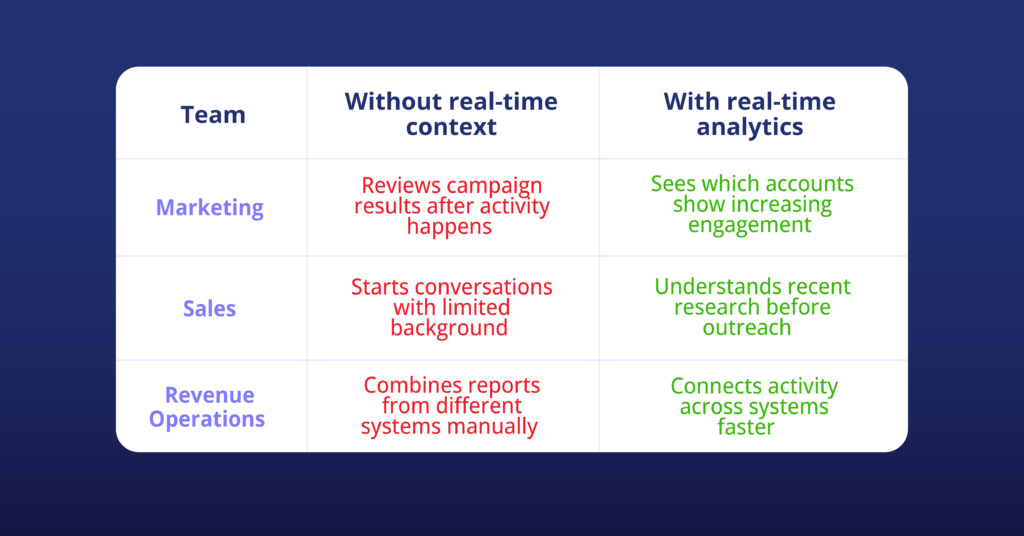
Marketing teams can use recent engagement data to understand which campaigns and content attract meaningful interest.
For example, a campaign may generate thousands of visits, but only a smaller group of accounts may continue exploring product pages, technical resources, and pricing information. These patterns help teams focus their efforts on accounts showing deeper engagement.
Sales teams can use the same context before starting conversations. Instead of seeing only a form submission, representatives can understand which topics an account has already explored and prepare more relevant outreach.
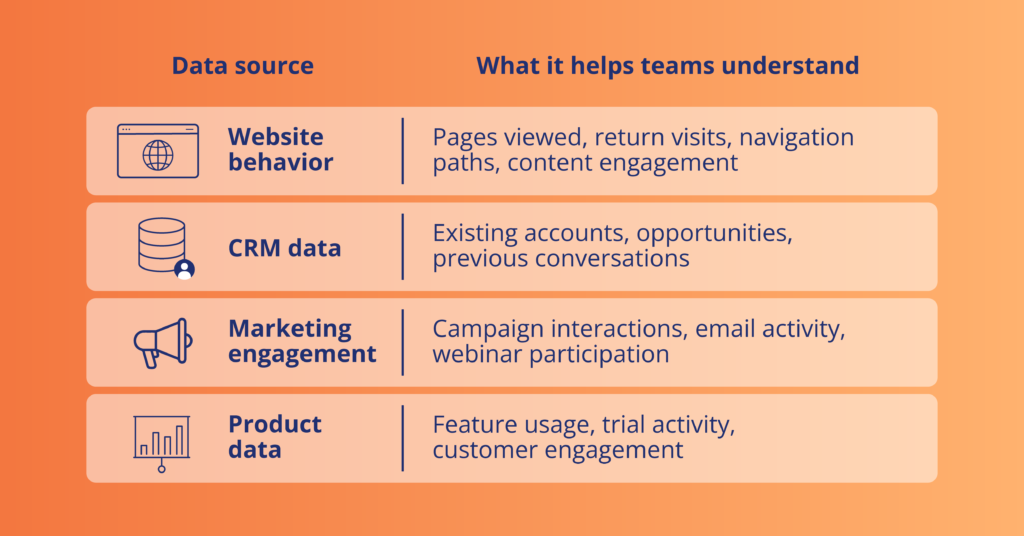
Across revenue operations, connecting website activity, CRM information, marketing engagement, and product data helps teams recognize changes in buyer behavior and decide where to focus next.
This is where visitor continuity adds value. By keeping context across sessions and touchpoints, teams can better understand how engagement develops and turn recent activity into action.
The same approach benefits organizations beyond B2B. For publishers and media companies, recognizing loyal readers over time creates opportunities to deliver more relevant experiences and build stronger audience relationships.
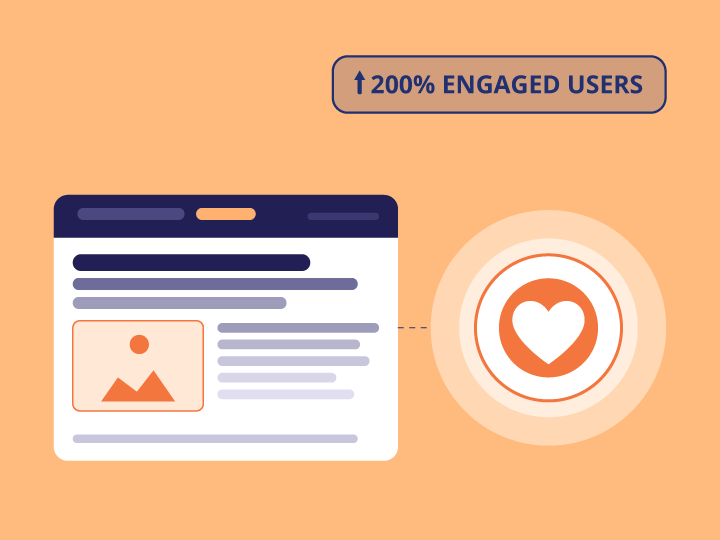
200% Higher Reader Engagement
Adenty helped a media group recognize returning visitors beyond individual sessions, extending visitor recognition by 2.6× and increasing publishing revenue by 15%.
Read moreWhat Data Powers Real-Time Analytics?
Real-time analytics becomes more useful when teams combine different sources of information. Each source answers a different part of the buyer activity puzzle.
Common data sources include:
The value of real-time analytics depends on how quickly new information can enter the system. The technical foundation behind many real-time systems is event-driven architecture, where actions are captured as events, processed through connected services, and used to trigger responses as changes occur.
For example:
User starts a product trial
↳ Event processed
↳ Marketing workflow updates
↳ Relevant follow-up campaign is triggered
Website clicks, product interactions, campaign responses, and account changes can be captured as events and processed as they happen. This allows teams to work with recent buyer behavior instead of waiting for periodic data updates.
Turning Real-Time Insights Into Revenue Actions
Recognizing buyer interest is only the first step. The value comes when teams can connect recent activity with the right action across marketing, sales, and revenue workflows.
Real-time analytics helps teams move from seeing engagement to understanding what it means and deciding how to respond.
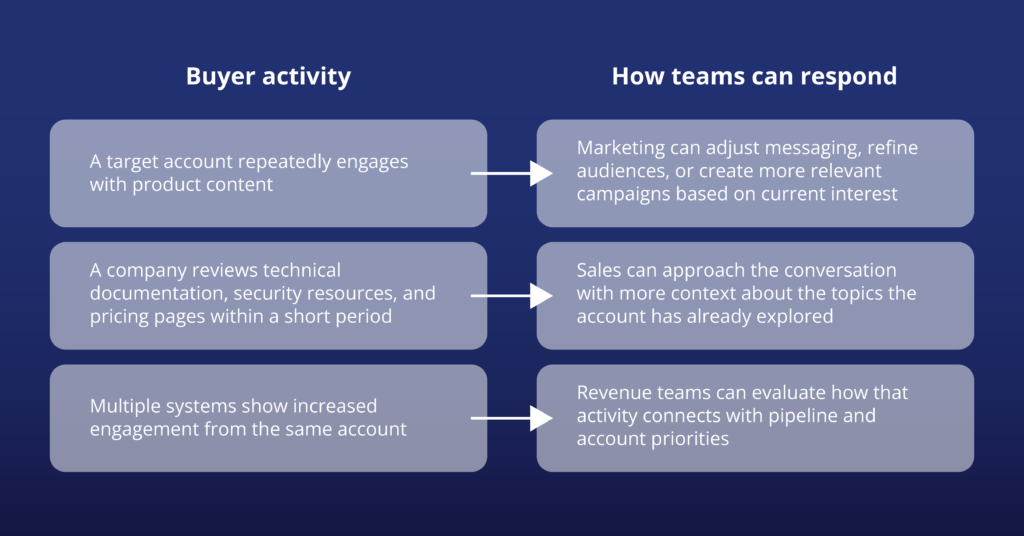
This is the approach behind many real-time data activation workflows: bringing relevant activity into the systems teams already use instead of leaving insights inside separate dashboards.
So what makes these signals useful in practice? Context.
Adenty helps teams maintain continuity across sessions and touchpoints, turning scattered visitor activity into information teams can use across marketing and sales workflows. See it in action right away.
Common Challenges With Real-Time Data Analytics
Real-time analytics can show what is happening with buyer activity, but turning those insights into action requires solving a few practical challenges first.
Challenge 1: Identifying which activity shows real buyer interest
Page views, clicks, downloads, and content engagement do not all carry the same meaning on the website.
Thus, teams need a way to separate routine browsing from activity that suggests an account is actively evaluating a solution. Combining website behavior with CRM history, campaign engagement, and account information helps create a clearer picture of which interactions deserve attention.
Challenge 2: Connecting buyer interactions across systems
Buyer activity is usually collected across multiple platforms. Analytics tools capture website behavior. CRM systems store account history. Marketing platforms track campaign engagement. Product systems record usage data.
When these sources remain disconnected, teams may miss how different interactions relate to the same evaluation process.
Your tools collect the clues. Adenty helps connect them.
Challenge 3: Turning real-time data into action without creating privacy risks
Real-time analytics requires teams to handle behavioral data carefully. They need clear processes for data collection, consent management, and activation across marketing and sales workflows.
Building these processes helps teams use current buyer activity while maintaining responsible data practices.
Buyer Intent Is Most Useful When Teams Can Act on It
Buyer intent develops through many interactions before a conversation with sales begins. Product research, technical reviews, pricing visits, and repeated engagement can reveal when an account is moving closer to a decision.
The main takeaway is simple: timing changes the value of information. Historical reports help teams understand past activity, but real-time analytics helps them recognize important changes while they are happening.
To make buyer intent actionable, teams need to:
- Connect activity across the systems they already use
- Focus on engagement patterns instead of isolated actions
- Bring relevant context into marketing and sales workflows
Real-time analytics gives teams the visibility to understand changing buyer behavior and decide where to act next, while interest is still developing.
Got buyer signals? Let’s talk.
