
How Anonymous Visitor Identification Works Across Sessions and Devices

Your website attracts plenty of interest. Visitors compare pricing, explore integrations, read technical content, and return multiple times before becoming leads. Analytics captures those actions, but it often misses whether they belong to the same evaluation process.
That matters because enterprise buying rarely happens in one session. Forrester found that purchases involve 13 internal stakeholders and 9 external influencers on average, with 78% of buyers in $10M+ purchases completing a product trial before selecting a vendor.
So where does that leave marketing and sales teams? They see traffic coming in, but much of the buying activity remains hidden across disconnected sessions and systems.
This is where visitor identification comes in. By connecting fragmented interactions across sessions, browsers, and devices, it helps teams understand how interest develops before a lead appears.
We’ll explore how it restores continuity across fragmented interactions, what data contributes to that process, and how teams can recognize buying interest earlier.
Anonymous Doesn’t Mean Unidentifiable
Anonymous visitors are often treated as lost opportunities. In reality, they leave behind signals throughout their interactions with your website.
A single visit may reveal browsing behavior. A returning session can show continued interest. CRM history, campaign engagement, and product activity can add more context around the same evaluation process.
The problem is keeping those interactions connected.
A buyer may research your solution across different browsers, devices, and locations. Different team members may review API documentation, security resources, and pricing pages over several weeks. Analytics often records those activities as separate sessions, even though they belong to the same evaluation process.
Think of it like reviewing a system log. A single event rarely explains what happened. A login failure, a configuration change, and a deployment error may look unrelated until they are connected in the right sequence.
Visitor activity works the same way. A documentation visit, a security review, and a pricing check may appear unrelated until those signals are connected into one journey.
This challenge has become more important as B2B research spreads across vendor websites, review platforms, communities, AI assistants, and search engines before buyers ever contact sales.
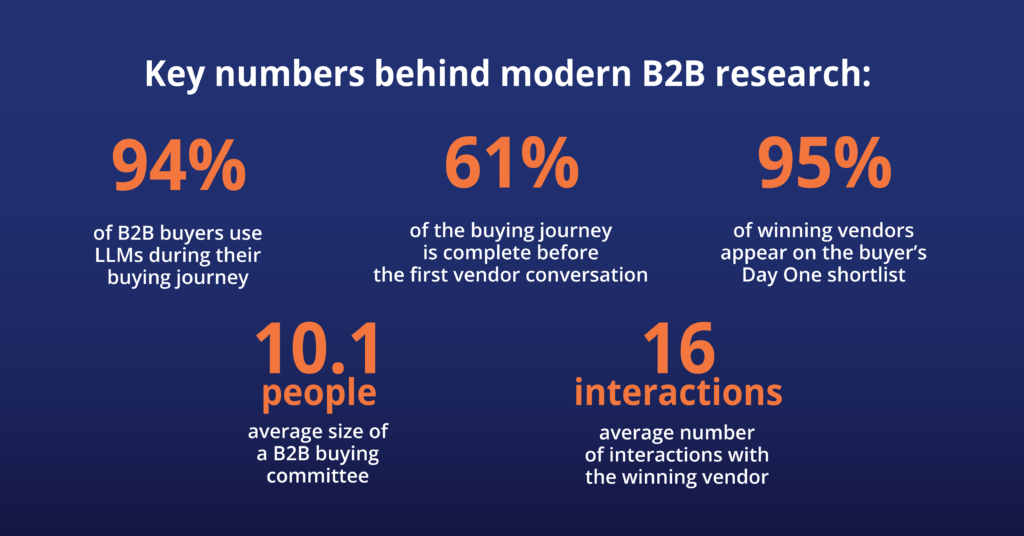
The result is a growing gap between buyer activity and revenue visibility.
Companies may have dozens of meaningful website interactions before a lead appears in the CRM. The signals exist, but they are often scattered across systems and sessions.
Most of those interactions never appear in your CRM.
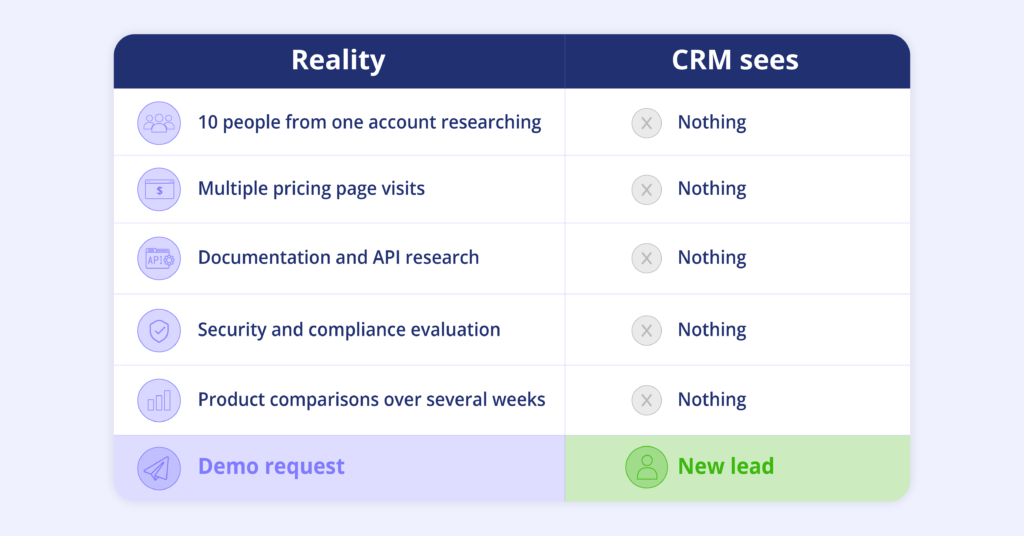
By the time a lead enters the CRM, teams often miss the earlier research behind that decision: the disconnected data is spread across analytics, CRM, marketing, and product systems.
What Evidence Contributes to Visitor Identification?
No single signal can explain whether someone is actively evaluating your solution. A visit to a pricing page could come from an existing customer, a competitor, or a potential buyer.
The picture becomes clearer when different types of evidence are connected.
Consider an account that:
- Returns to your website multiple times
- Explores API documentation and integration guides
- Reviews security resources
- Checks pricing after technical research
- Matches previous campaign engagement
Each interaction provides additional context. Together, they create a stronger understanding of the evaluation activity.
Different data sources answer different questions:
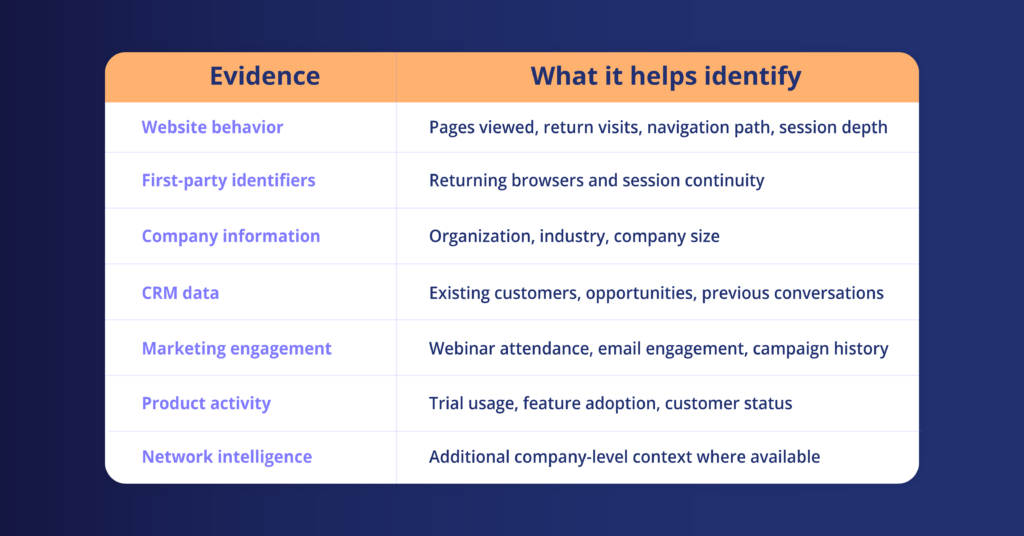
Website behavior explains what happened. Company and CRM data provide business context. Marketing and product interactions show how engagement develops over time.
Identity Resolution: Connecting Fragmented Signals
Identity resolution connects related interactions that would otherwise appear as separate events across different systems.
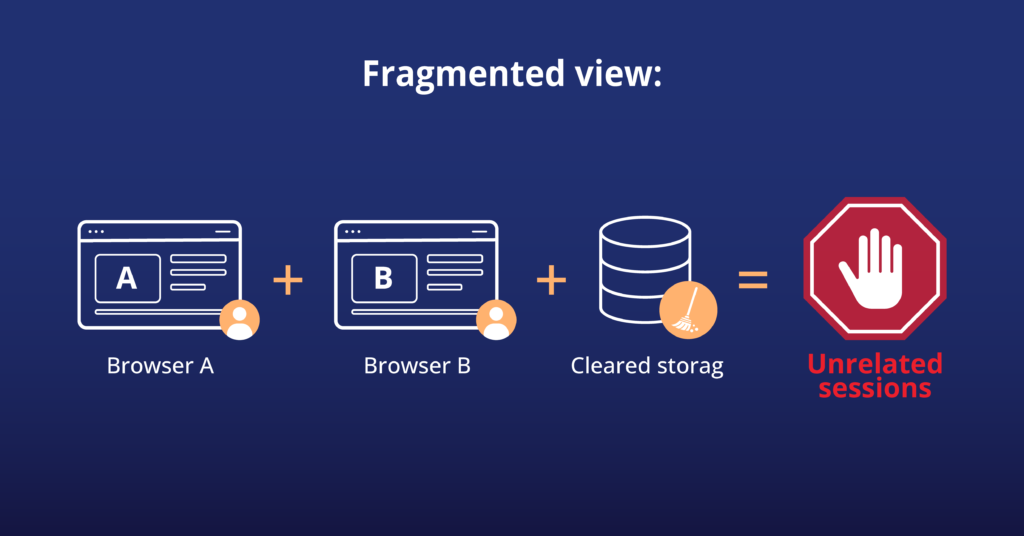
A visitor may return several times, switch devices, clear browser storage, or interact with your website through different touchpoints. Without a way to connect those signals, each interaction can look like a new visitor.
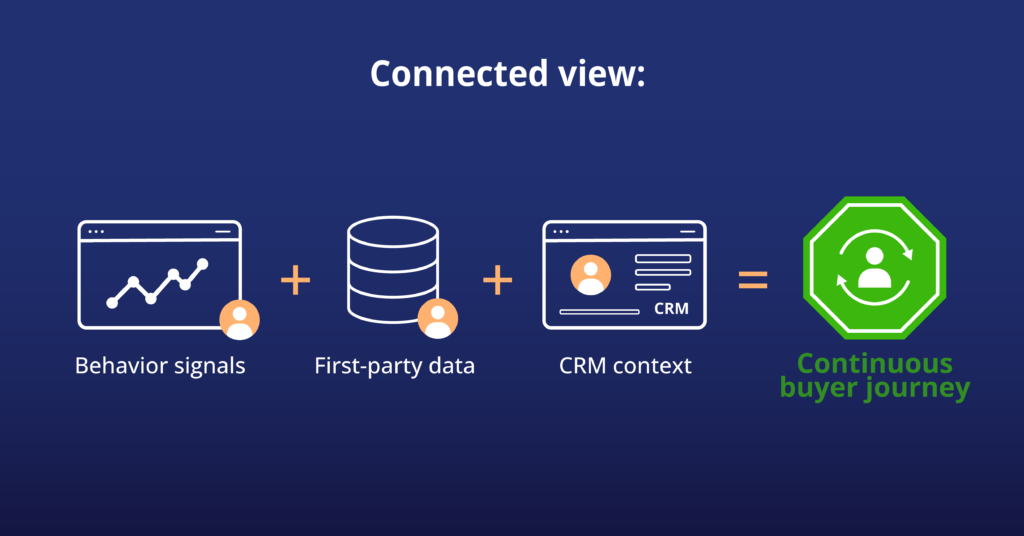
The process combines different types of evidence to determine whether activities likely belong together. Website behavior, first-party identifiers, CRM history, marketing engagement, and product activity can all contribute to a more consistent view of the visitor journey.
For example:
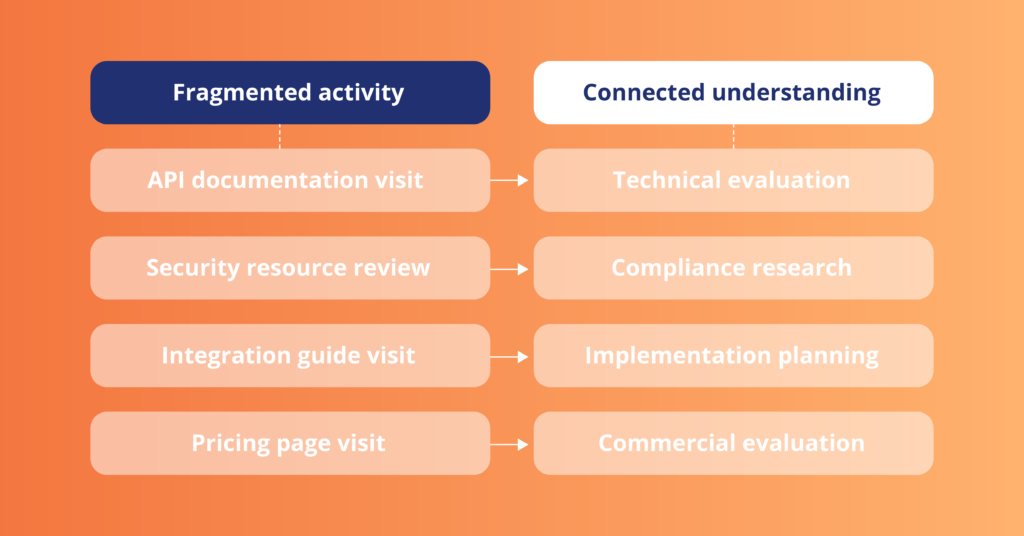
Each interaction provides additional context. Connected, they show how evaluation develops across multiple touchpoints.
How Visitor Continuity Works Across Sessions and Devices
Modern buying journeys rarely happen in one session. A potential customer may discover your website through search, return later through a campaign link, explore technical resources from another device, and involve additional team members before contacting sales.
This creates a technical challenge: keeping related interactions connected when the environment changes.
These interaction points can include:
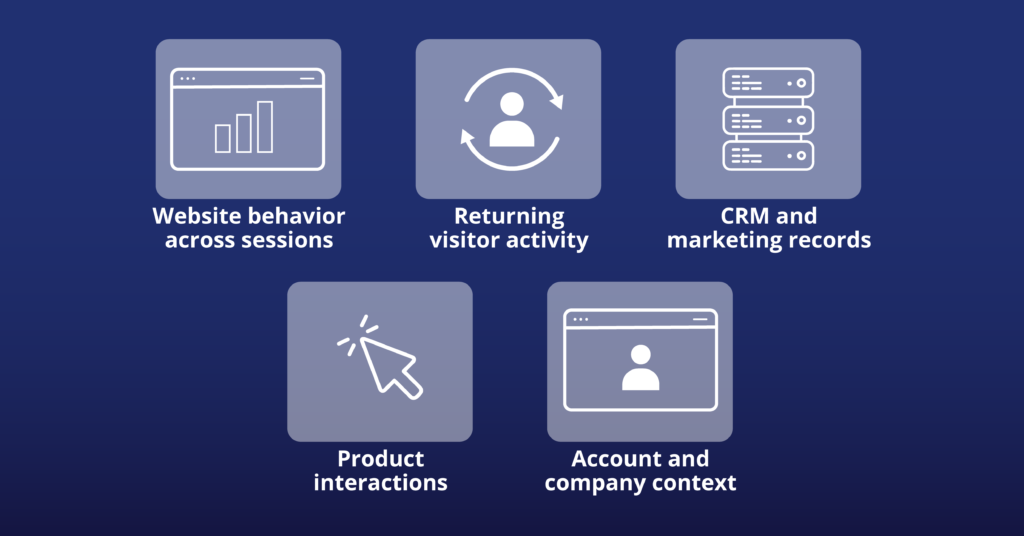
For example, a developer may first visit your documentation pages from a work laptop. A security specialist from the same organization may later review compliance materials. A business stakeholder may return to compare pricing. Each interaction answers a different question during evaluation.
When those points remain connected, teams gain visibility into the process before a lead enters the CRM.
Why Cookies Alone Cannot Provide the Full Picture
For years, cookies helped websites recognize returning visitors across sessions.
Today, third-party cookie restrictions, cleared browser storage, and different browser behaviors can make it harder to connect those interactions over time.
So what fills that gap?
First-party signals.
Website behavior, CRM history, marketing engagement, and product activity help connect fragmented interactions and show how a buyer’s journey develops over time.
Every missing signal leaves a blind spot. Collect richer behavioral data, connect fragmented interactions, and give your existing tools a much clearer picture of every visitor.
How Company Context Completes the Visitor Journey
Company identification can provide valuable context, but it is one part of a broader visitor intelligence process.
Knowing that a visitor belongs to a target account can help teams prioritize outreach, personalize campaigns, and understand account engagement. The value increases when company information is combined with behavioral signals and previous interactions.
For example:
A company visiting your website once provides limited context.
A company returning multiple times, exploring technical documentation, reviewing security resources, and matching previous campaign engagement shows a much stronger evaluation signal.
Company context helps explain where interest is coming from.
Connected visitor activity shows how that interest develops over time.
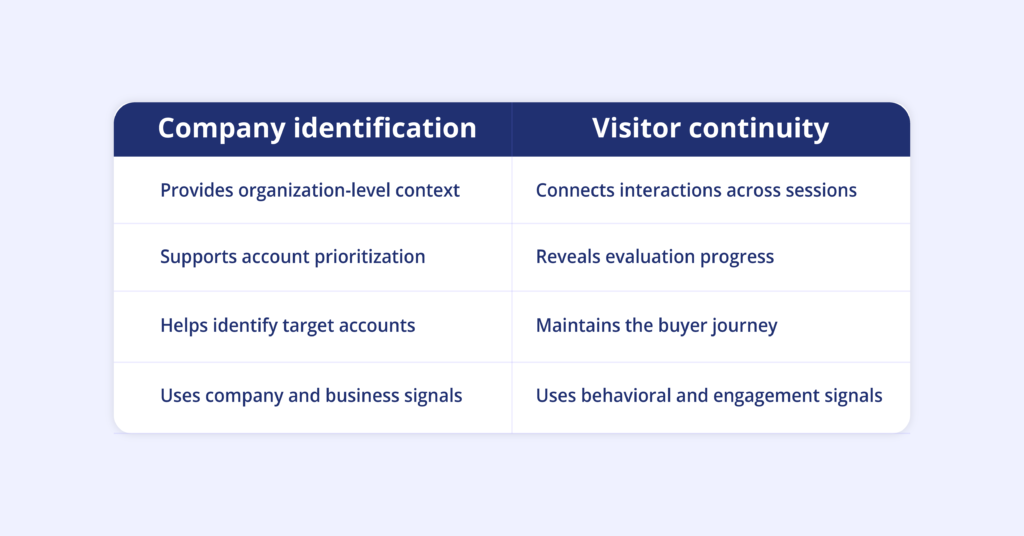
For revenue teams, both can be valuable. The difference is that continuity creates the foundation that allows individual signals to become meaningful.
More returning visitors. More conversions.
Recognizing returning visitors across sessions gave this MarTech SaaS company a clearer picture of buyer behavior. Richer visitor profiles powered more relevant recommendations and stronger on-site engagement, turning existing traffic into measurable business growth.
Business impact:
✓ 45% more website conversions
✓ 120 new users acquired
✓ 33% more visits to recommended content
✓ 42% richer visitor profiles
✓ 20% longer sessions
Explore the case study
Adding Context to Visitor Signals
Connected interactions become more valuable when they are combined with business context.
Website behavior can show what someone explored. Enrichment can help answer questions such as:
- Is this account already known to our team?
- Does this organization match our ideal customer profile?
- Has this company interacted with us before?
- Is current activity increasing compared with previous engagement?
To answer these confidently, Adenty works alongside existing analytics, CRM, CDP, and marketing systems by connecting fragmented visitor interactions into a more consistent view of activity.
Turning Visitor Signals Into Revenue Actions
Recognizing buying activity is only useful when teams can act on it.
Once visitor signals are connected and enriched, they can support workflows across marketing, sales, and revenue operations.
Marketing teams can use these signals to:
- Build more relevant audiences
- Adjust campaigns based on account engagement
- Understand which channels contribute to active interest
Sales teams can use them to:
- Prioritize accounts showing research activity
- Prepare outreach with more context
- Recognize when interest develops before a form submission
Revenue teams can use connected signals to better understand how website activity contributes to pipeline.
This is where data activation becomes important. Instead of leaving visitor activity inside analytics dashboards, teams can move relevant signals into the systems they already use, including CRM, marketing automation, and advertising platforms.
Your tools are only as good as the data behind them. Sharpen it.
Traditional Analytics vs. Visitor Intelligence
You might be wondering: aren’t analytics platforms already doing this? The answer comes down to the type of questions each system is built to answer.
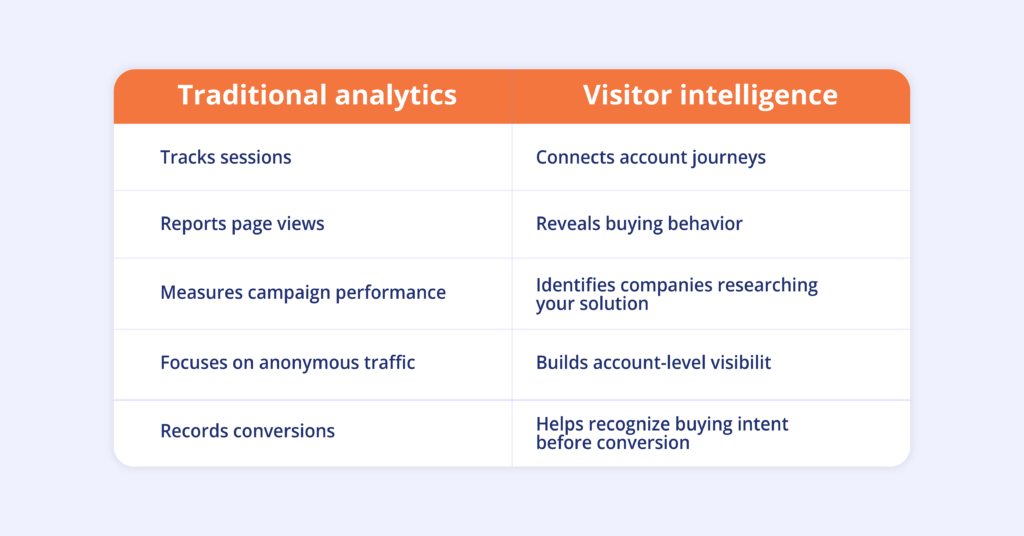
The two approaches complement one another. Analytics explains how your website performs. Visitor intelligence explains who is behind that performance.
Even when browsers play hard to get, you can still land 99% recognition. Try Adenty free and see who’s really behind the visit.
Choosing a Website Visitor Identification Platform
Different vendors solve different parts of the identity problem. Comparing capabilities helps separate basic visitor tracking from a complete visitor intelligence platform.
Use this checklist during evaluation:
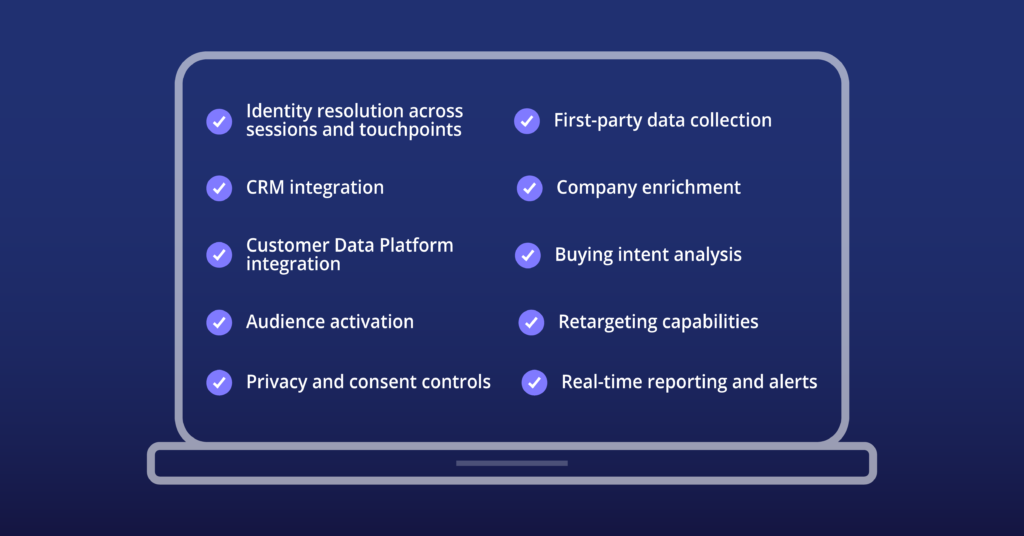
Organizations often discover that the platform itself isn’t the deciding factor. The quality of identity resolution, integrations, and activation determines how useful the data becomes across marketing and sales.
In a Nutshell
Anonymous visitors aren’t invisible. They leave behind evidence throughout every stage of the buying journey. The opportunity lies in connecting that evidence before it disappears into disconnected dashboards.
Organizations that correlate website behavior with CRM data, company information, and historical engagement gain a much clearer understanding of which accounts are actively evaluating their products. That visibility helps marketing prioritize campaigns, gives sales earlier buying signals, and provides leadership with a more accurate view of pipeline development.
The website has always contained valuable buying intelligence. Modern visitor identification makes that intelligence visible.
Got a tracking challenge? Book a free consultation – we’ll show you what you’re might be missing.
